

We Are Still Designing for a Human That No Longer Exists
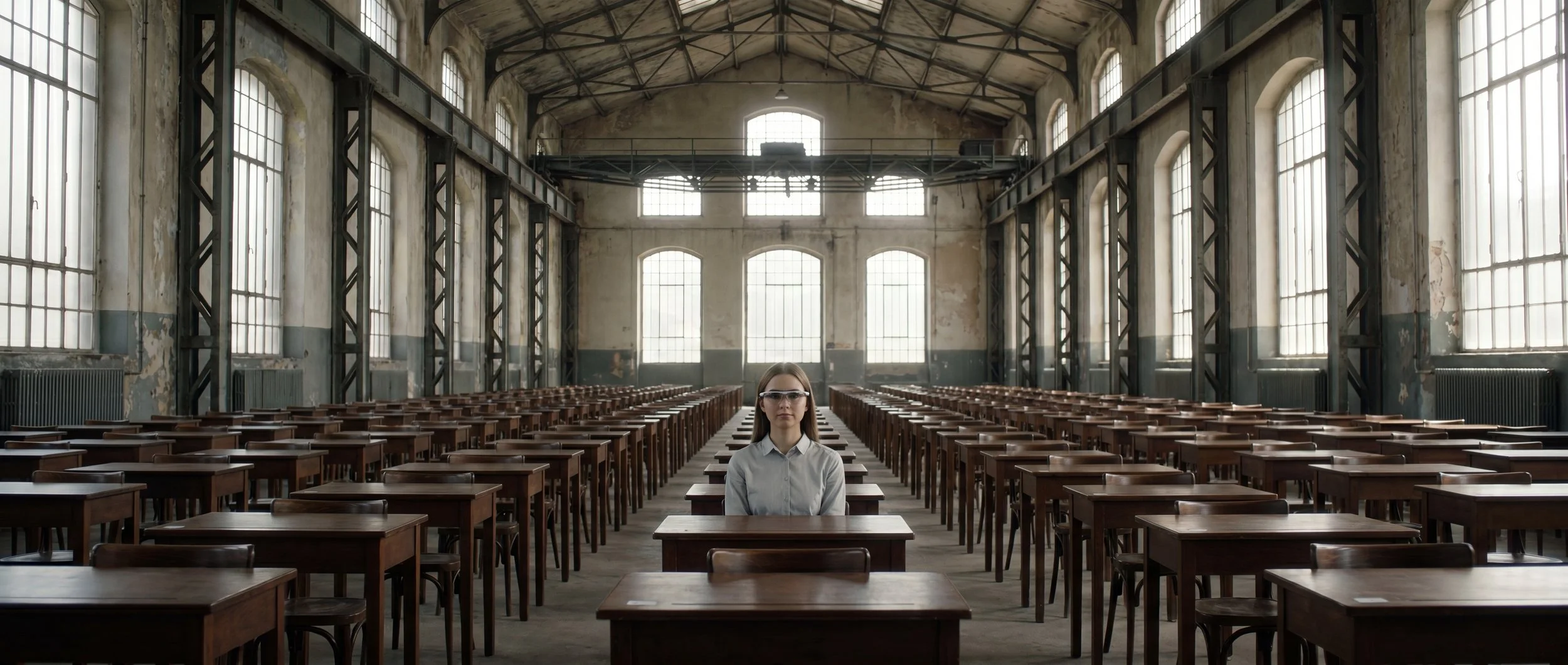
Many of the systems we rely on today were designed for a very different understanding of what it means to be human.
AI Is Changing the Assumptions We Make About Being Human
A few days ago, I came across a news story about someone using smart glasses to cheat on an English proficiency exam.
Predictably, public reaction focused on the individual.
It was described as cheating.
A violation of rules.
Another example of technology being misused.
Yet that was not what caught my attention.
What struck me was the exam itself.
More specifically, the assumptions behind it.
We now live in a world where real-time translation is becoming commonplace.
Smartphones can translate conversations instantly.
Smart glasses are beginning to overlay translated text directly into our field of view.
AI systems can already explain complex concepts, summarize documents, and communicate across languages at a level that exceeds the abilities of most people.
And yet, many of our educational and professional systems continue to behave as if none of this exists.
The more I think about it, the more I wonder:
Perhaps the problem is not that technology is moving too fast.
Perhaps the problem is that our institutions are still designed for a human that no longer exists.
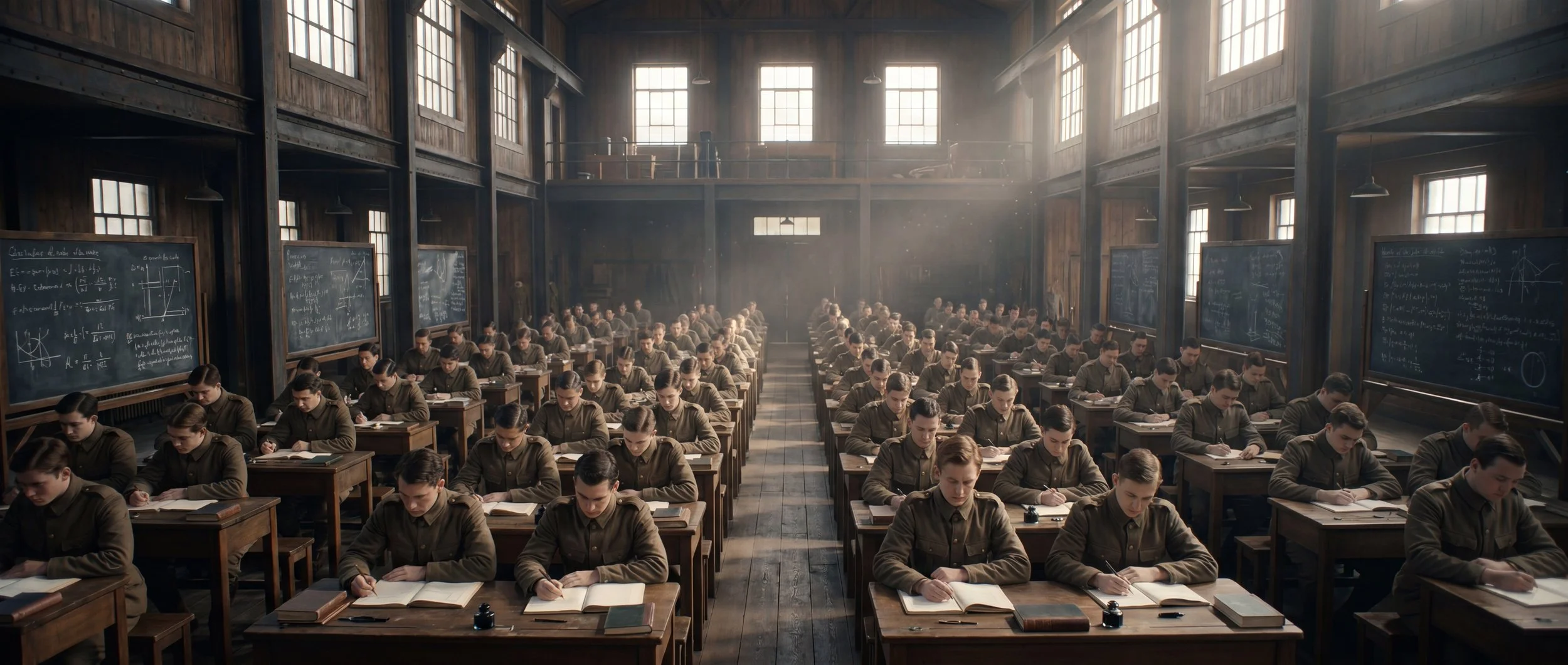
Modern institutions were built for a world where knowledge was scarce and memory created value.
The Human We Were Trained to Become
For more than a century, modern society has operated under a particular model of what it means to be human.
A valuable human was someone who could remember.
Someone who could calculate.
Someone who could accumulate knowledge.
Someone who could spend years acquiring expertise that others did not possess.
Education systems were built around this assumption.
Organizations were built around this assumption.
Professional certifications were built around this assumption.
Entire careers were built around this assumption.
Knowledge was scarce.
Information was scarce.
Expertise was scarce.
The ability to access, store, and retrieve information created value.
In many ways, modern civilization was built upon that scarcity.

What society often values is not knowledge itself, but the time required to acquire it.
We Never Worshipped Knowledge
There is a common belief that society respects knowledge.
I am no longer convinced that this is entirely true.
What we often respect is not knowledge itself.
It is the time invested to acquire it.
A degree represents years of study.
A certification represents preparation and effort.
Expertise represents decades of accumulated experience.
We assign value not only to what someone knows, but to the journey required to know it.
Knowledge became meaningful because it was difficult to obtain.
Effort became proof of value.
Time became proof of legitimacy.

AI does not eliminate knowledge. It separates knowledge from the time once required to obtain it.
AI Breaks the Relationship Between Time and Knowledge
Artificial intelligence introduces a disruption unlike any technology before it.
Not because it creates knowledge.
But because it separates knowledge from time.
For centuries, knowledge and effort were tightly linked.
More knowledge required more study.
More expertise required more experience.
More capability required more time.
AI breaks that equation.
What once required years of research can now be summarized in minutes.
What once required extensive technical training can now be explained instantly.
What once demanded specialized expertise can increasingly be accessed through conversation.
The knowledge remains.
The effort disappears.
And for many people, that feels unsettling.

Much of the resistance to AI may be less about technology and more about the meaning we attach to our own effort.
The Source of Resistance
This is why I believe much of society's resistance to AI is not actually about technology.
It is about identity.
When people say:
"AI makes learning meaningless."
"AI makes expertise worthless."
"AI makes creativity less valuable."
They may not be defending knowledge.
They may be defending the meaning attached to the time they invested acquiring it.
After all, if someone can achieve in minutes what took us years, what does that say about those years?
The emotional reaction is understandable.
But it does not change reality.
Technology has always altered the relationship between effort and outcome.
The calculator changed mathematics.
The internet changed information.
GPS changed navigation.
AI is changing knowledge.

The ability to replicate a style does not diminish the significance of the original vision behind it.
The Value Has Not Disappeared
This is where I often disagree with the more pessimistic narratives surrounding AI.
Consider the debate around AI-generated artwork.
Some artists see AI-generated images as a threat to the value of their work.
Others see them as evidence that creative labor is being commoditized.
I understand those concerns.
But I do not believe that the value of great art disappears simply because its visual style can be replicated.
The existence of millions of images inspired by a particular artistic tradition does not diminish the significance of the original work.
If anything, it highlights its cultural influence.
The value was never the brushstroke itself.
The value was always the vision behind it.
The same principle applies far beyond art.
AI does not destroy value.
It forces value to move.

As knowledge becomes abundant, value shifts toward judgment, interpretation, and responsibility.
From Knowledge to Judgment
If AI can access more information than any individual human, then knowledge alone becomes a weaker differentiator.
The question shifts.
Not:
"How much do you know?"
But:
"What do you choose to do with what is known?"
The future may place less emphasis on information itself and more emphasis on judgment.
Interpretation.
Context.
Meaning.
Responsibility.
Not because knowledge becomes irrelevant.
But because knowledge becomes abundant.
When scarcity disappears, value migrates elsewhere.
Many systems continue to evaluate people according to assumptions that no longer reflect reality.
The Human That No Longer Exists
The most interesting question raised by AI is not whether machines will replace humans.
It is whether the assumptions we make about humans remain valid.
Many of our institutions continue to measure people according to criteria that made sense in an age of information scarcity.
Examinations.
Hiring practices.
Professional credentials.
Performance evaluations.
Even education itself.
Yet the environment those systems were designed for is disappearing.
The human they were built to assess is disappearing with it.
Not because humans are becoming obsolete.
But because the definition of capability is changing.
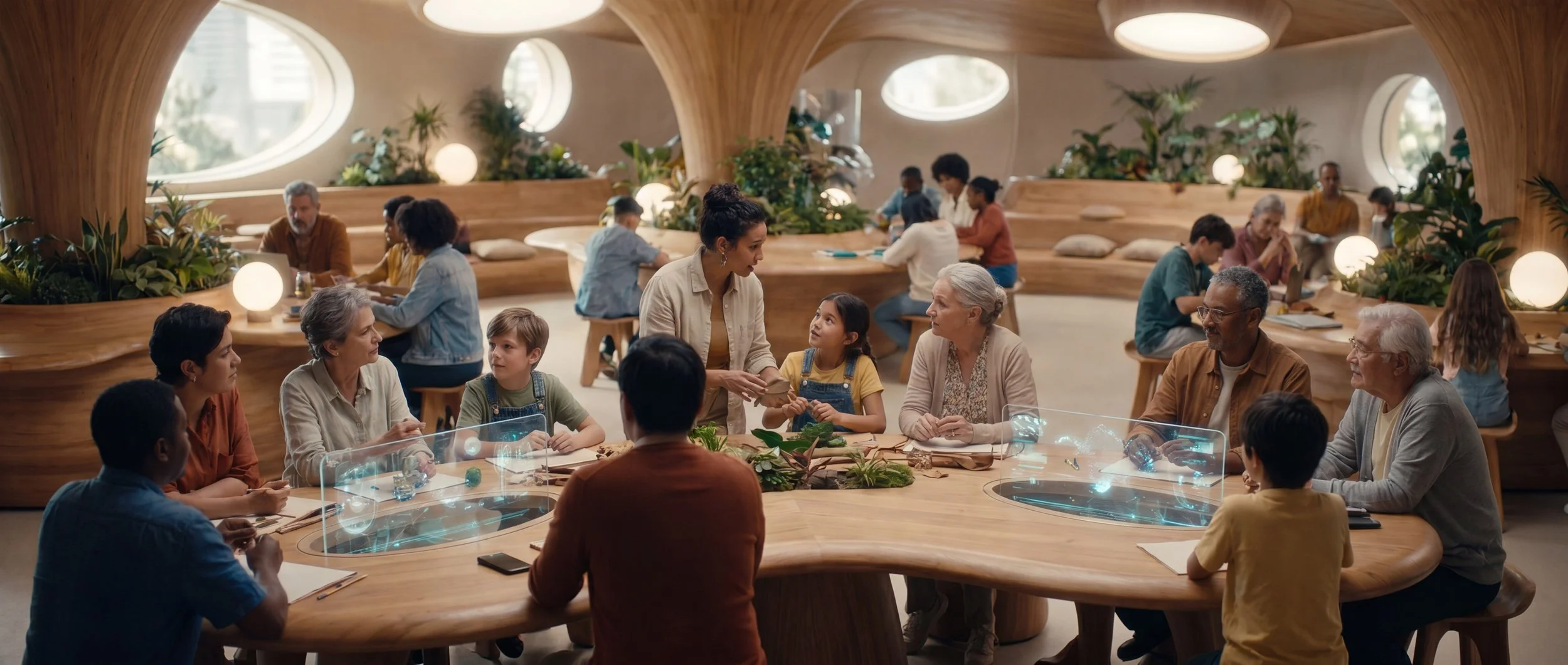
The challenge is no longer how to exclude AI, but how to redefine value in a world where intelligence is abundant.
A Different Question
Perhaps the challenge facing society is not how to keep AI out of education.
Or how to prevent AI from participating in human activities.
Perhaps the real challenge is learning how to redefine value in a world where intelligence is no longer scarce.
The future may not belong to those who know the most.
It may belong to those who ask the best questions.
Those who create meaning.
Those who exercise judgment.
Those who understand what matters.
AI is not changing technology.
It is changing the assumptions we make about being human.
And perhaps the systems we built for the last century are struggling because they were designed for a human that no longer exists.

AI is not changing technology. It is changing the assumptions we make about being human.
