


We Are Still Designing for a Human That No Longer Exists
Perhaps the greatest disruption caused by AI is not technological. It is forcing us to reconsider the assumptions we have long held about being human.

Trust Design
UX is not information design. It is trust design. Exploring how autonomous systems reshape human attention, decision-making, and confidence.
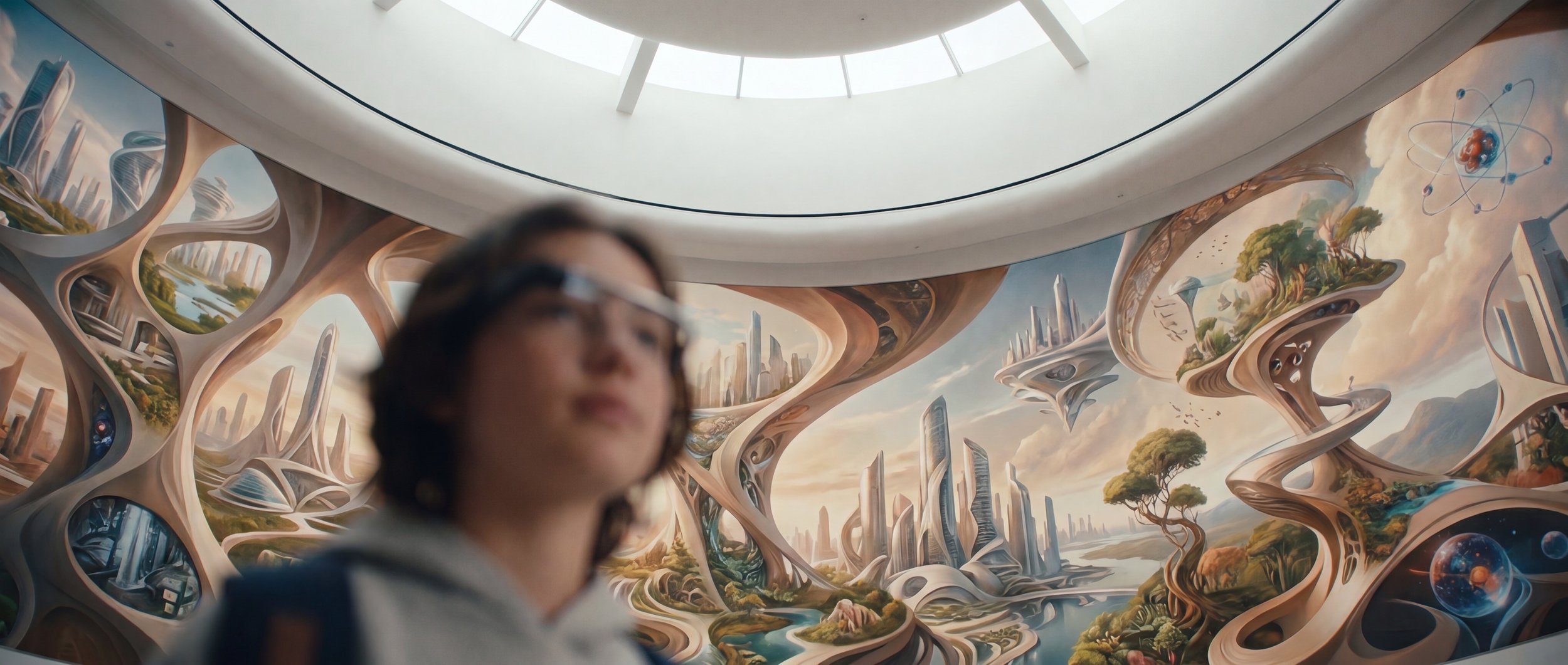
When Latency Becomes User Experience
As AI becomes embedded in creative education, the most important interface may no longer be the screen. It may be time itself.

Swarm vs Micro vs Nano

Destination-less Mobility — Driving Without Arrival
We decide where to go, and the vehicle performs the physical task of getting us there.

Why Strategy Must Be Designed Around Scenarios, Not Predictions
Strategy has long been associated with prediction.
Forecasting trends.
Estimating probabilities.
Choosing the most likely future and preparing for it.

Why Information Is Not Delivered, but Interpreted
Information is often treated as something that moves from one place to another.
A message is sent.
A signal is received.
Meaning is assumed to transfer intact.

Why AI-Native Organizations Must Be Designed Around Roles, Not Tools
When organizations talk about becoming “AI-native,” the conversation almost always begins with tools.
Which model to use.
Which platform to adopt.
Which workflow to automate.

Why Technology Ethics Is About Designing Responsibility Structures, Not Rules
When technology ethics is discussed, it is often framed as a list.
Things a system should not do.
Boundaries that must not be crossed.

Why Autonomous Systems Must Be Designed Around Judgment and Stopping, Not Just Movement
Autonomous systems are often discussed in terms of motion.
How smoothly they move.
How fast they react.
How efficiently they navigate space.