

Trust Design
Why the Future of Unmanned Systems Is Not About Information

The future of autonomous systems may depend less on what machines can do, and more on what humans are willing to trust.
The conversation around unmanned systems often begins with technology.
Autonomy.
Artificial intelligence.
Sensors.
Networks.
Data fusion.
Human-machine teaming.
As these technologies evolve, the discussion usually focuses on capability.
How many platforms can be deployed.
How much data can be collected.
How accurately a target can be detected.
How quickly a decision can be made.
Yet beneath all of these questions lies a more fundamental challenge.
Not information.
Trust.
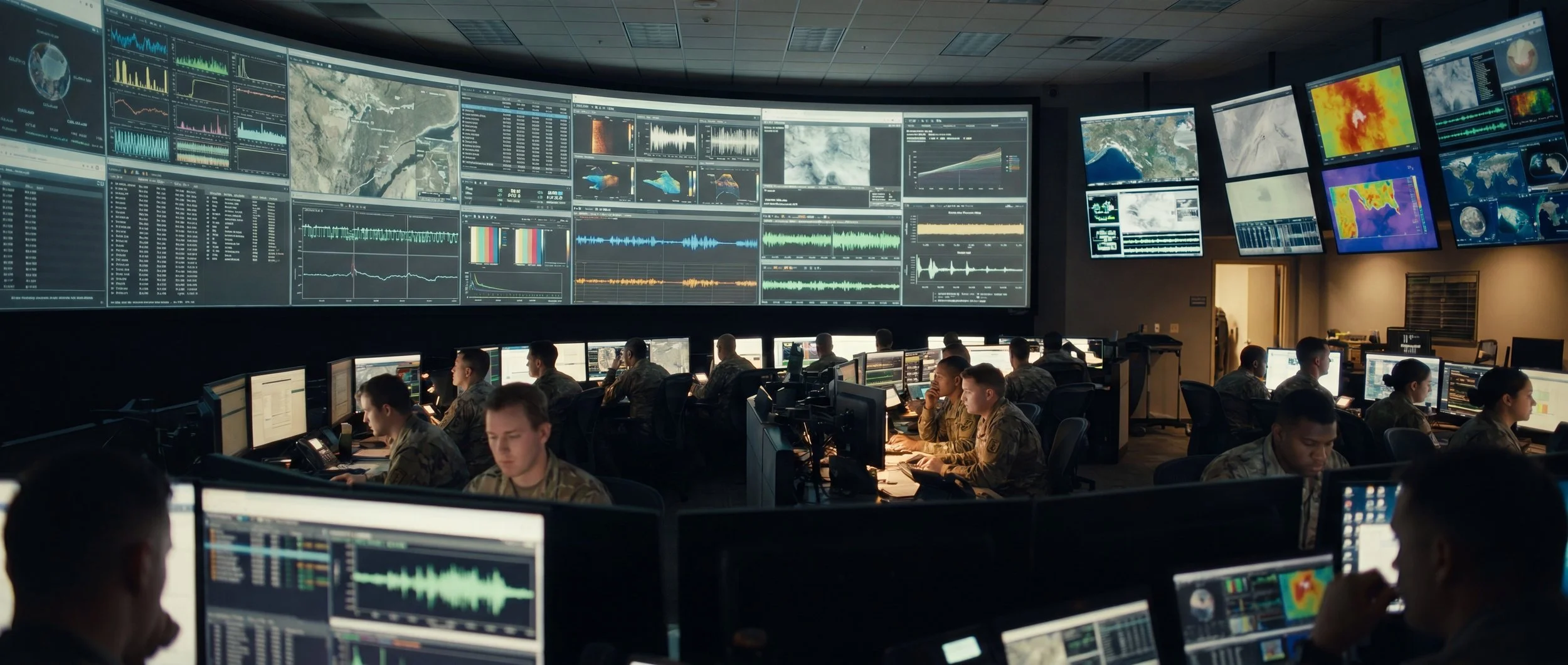
The challenge is no longer obtaining information. It is deciding what deserves attention.
The Problem Is No Longer Access to Information
For decades, military systems were designed around a simple assumption:
More information leads to better decisions.
As a result, sensors multiplied.
Networks expanded.
Displays became more sophisticated.
Information flowed continuously toward commanders and operators.
The objective was clear.
Provide the human with as much awareness as possible.
But unmanned systems change the equation.
Modern operations may involve dozens—or even hundreds—of autonomous assets operating simultaneously across multiple domains.
Air.
Land.
Sea.
Undersea.
Space.
Cyber.
No human can meaningfully observe everything.
More importantly, no human should.

The most effective systems are not those that reveal everything, but those that reveal only what matters.
The Real Question
As autonomy increases, a new question emerges.
Not:
"What information should we show?"
But:
"What information no longer needs to be shown?"
This distinction may appear subtle.
It is not.
The future challenge is not information management.
It is confidence management.
Every autonomous decision creates a new relationship between human and machine.
Every recommendation requires trust.
Every automated action requires delegation.
The system succeeds not when it shows everything.
It succeeds when the human feels comfortable not seeing everything.
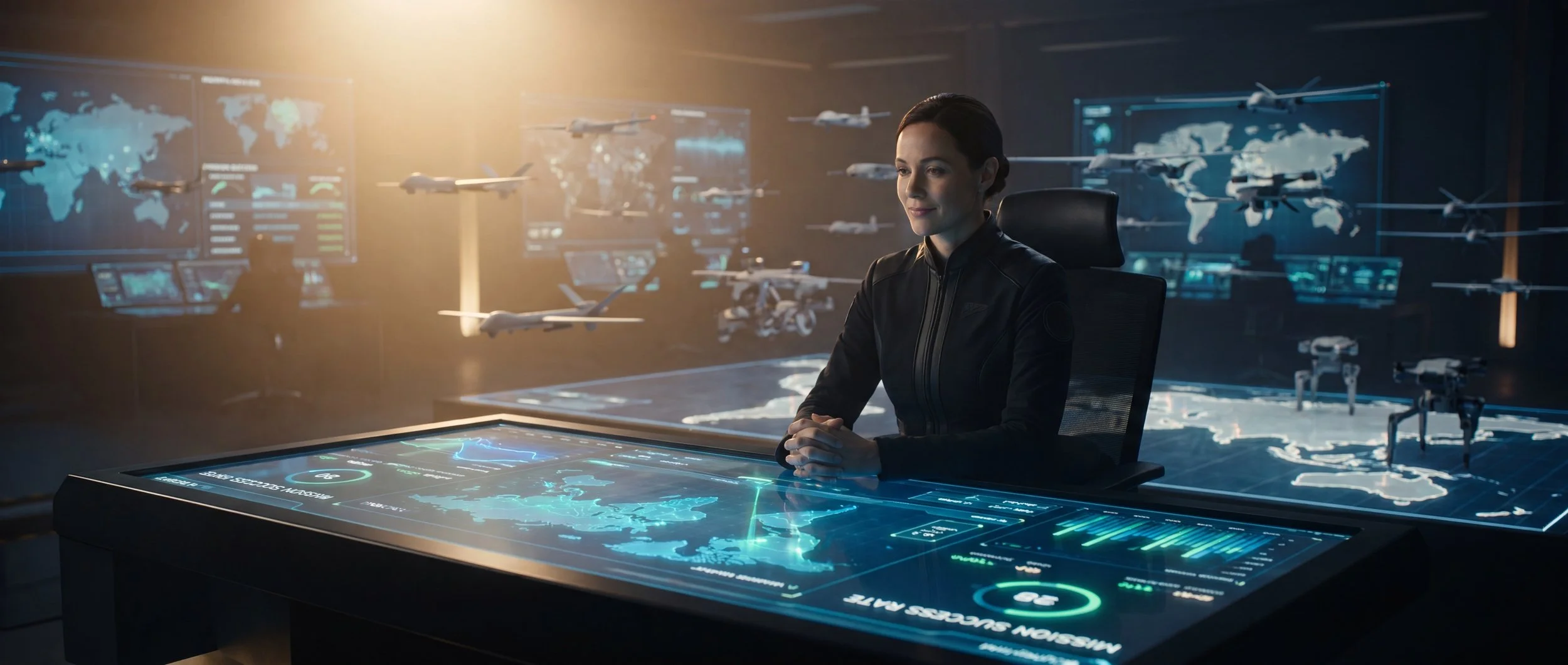
UX is not information design. It is trust design.
UX Is Not Information Design
In many discussions, UX is still treated as an interface problem.
Screen layouts.
Control panels.
Data visualization.
Alert management.
These remain important.
But within large-scale unmanned systems, UX occupies a different role.
UX is not information design.
UX is trust design.
Its purpose is not to maximize visibility.
Its purpose is to determine what can safely disappear.
A successful interface is not one that exposes every sensor reading.
It is one that allows operators to focus only on what requires human judgment.
Everything else should fade into the background.

Delegation becomes possible when confidence is supported by understanding rather than blind automation.
Explainable Delegation
Delegation has always existed in military organizations.
Commanders delegate to subordinates.
Organizations delegate to specialized units.
Autonomous systems introduce a new form of delegation.
Humans begin delegating decisions to machines.
The challenge is that delegation without understanding rarely creates trust.
"Because the AI said so" is not an explanation.
It is a black box.
Trust emerges when delegation becomes understandable.
This is where Explainable Delegation becomes important.
The operator does not need every piece of underlying data.
But they need enough context to understand why a recommendation exists.
Why the system is confident.
Why intervention is unnecessary.
Why attention should be directed elsewhere.
The objective is not complete transparency.
The objective is confidence.
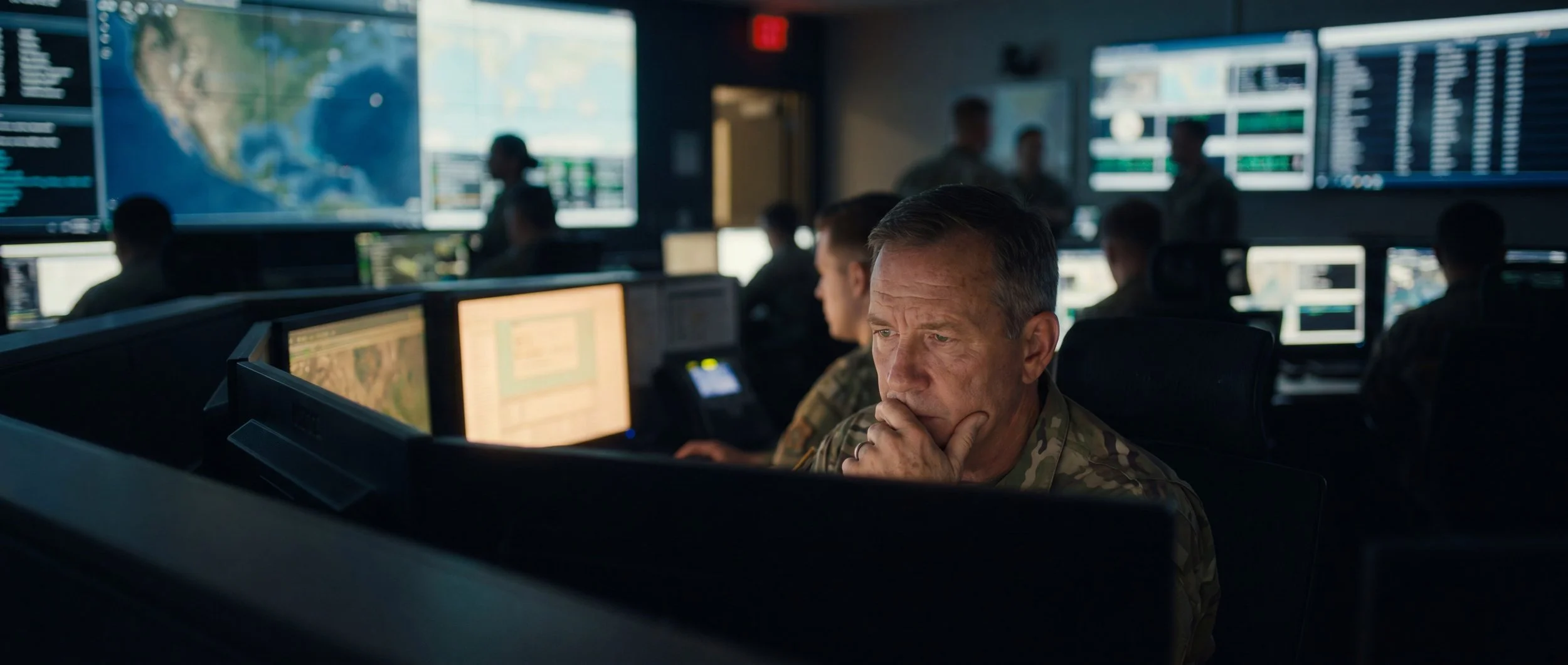
The most valuable resource in future operations may not be data, but human attention.
Designing Human Attention
Perhaps the most valuable resource in future operations will not be fuel.
Or bandwidth.
Or computing power.
It will be human attention.
Attention is limited.
Cognitive capacity is limited.
Decision-making capacity is limited.
Every piece of information consumes part of that resource.
The role of autonomous systems is therefore not simply to automate tasks.
It is to protect human attention.
Good design determines where attention should be invested.
Great design determines where attention is no longer required.
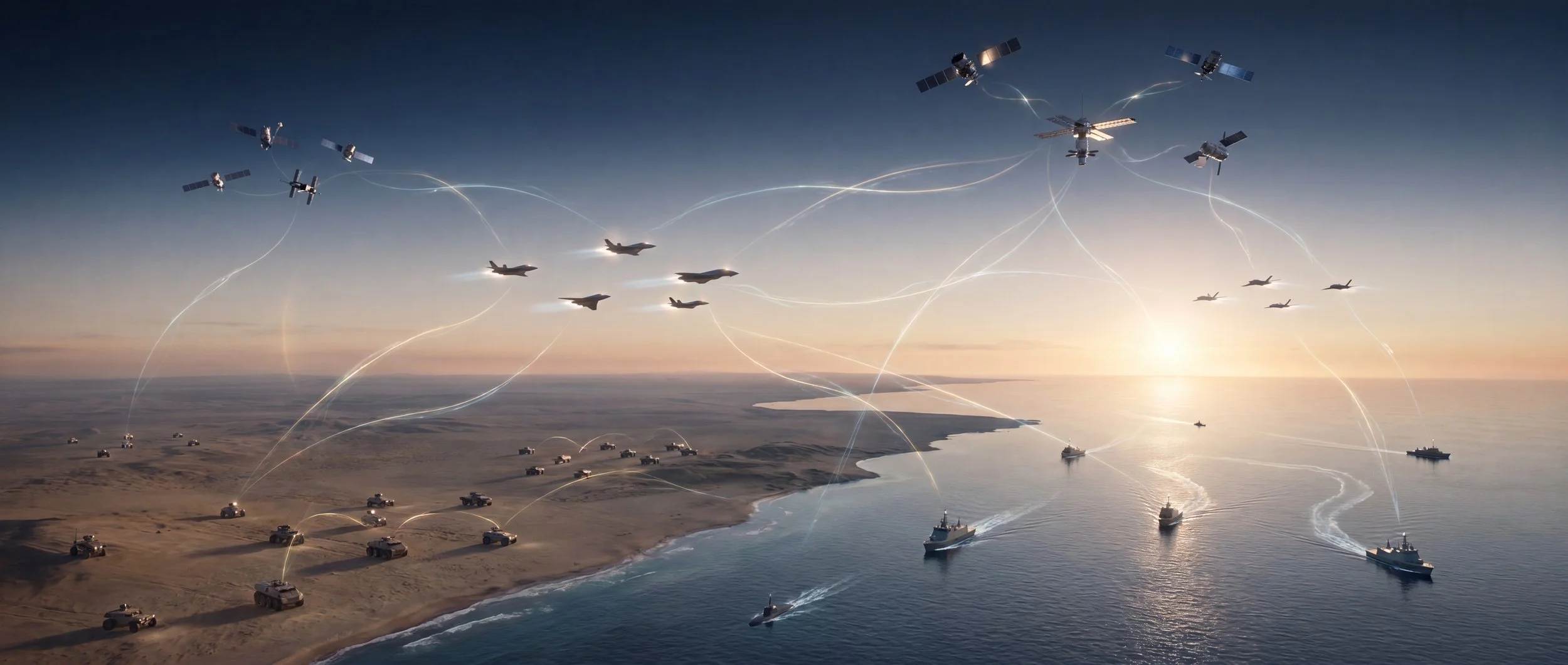
Trust is not a psychological feature. It is operational infrastructure.
Trust as Operational Infrastructure
Discussions about unmanned systems often focus on platforms.
Vehicles.
Sensors.
Weapons.
Networks.
Yet trust may become just as important as any physical component.
Without trust, operators override automation.
Without trust, commanders hesitate.
Without trust, autonomy remains unused regardless of technical capability.
Trust is not a psychological afterthought.
It is operational infrastructure.
And like any infrastructure, it must be intentionally designed.

Human-machine teaming succeeds when humans focus on intent and machines handle complexity.
The Future of Human-Machine Teaming
As unmanned systems continue to evolve, the measure of success may no longer be how much information can be delivered to humans.
It may be how much information humans no longer need.
The future of human-machine teaming is not about creating systems that know everything.
It is about creating systems that allow humans to focus on the things that matter most.
The ultimate goal is not visibility.
It is confidence.
Not information.
Trust.
And perhaps the future of UX in autonomous systems can be summarized by a single idea:
Design is not about helping humans see more.
It is about helping humans confidently ignore what no longer requires their attention.

Design is not about helping humans see more. It is about helping them confidently ignore what no longer requires their attention.
